The most recent state-wide budget cuts have forced drastic cuts to personal injury cases in the Los Angeles County Superior Court, as well as other counties within California. Imminent changes will have meaningful and profound effects upon the way cases are handled in the California judicial system. Recent changes in the Los Angeles Superior Court illustrate these draconian changes:
The “Fast Track” system in Los Angeles County Superior Court has ended. After being ordered to cut its budget by $55 million to $86 million within the next six months, the Superior Court system will be closing ten courthouses this month, and it is assigning all personal injury cases to three Courtrooms consisting of five Judges. Each courtroom will be required to manage as many as 8,000 cases.
In Los Angeles County, ten courthouses are closing with their bench officers redeployed elsewhere in the Superior Court system. These include the Huntington Park, Whittier, Pomona North, Malibu, West Los Angeles, Beverly Hills, and San Pedro courthouses.
All personal injury and limited jurisdiction actions will now be filed in the Downtown Los Angeles Courthouse. Personal injury actions at the Downtown Courthouse will be handled by the master calendar judges. Personal injury cases currently filed in outlying districts are being transferred to the Central Courthouse.
In order to handle the enormous caseload increase, the Court will stop monitoring the service of Summons and Complaints upon defendants. The Court is also eliminating Case Management Conferences. When a plaintiff files a Complaint, the Court will issue a trial and Final Status Conference dates. Trials will likely be set approximately 18 months after filing of the Complaint. The plaintiff will have six months to serve the defendants.
The Court will no longer require parties in personal injury cases to report back on the results of any settlement conferences or mediation. None will be ordered. Indeed, all Alternative Dispute Resolution programs at each of the County of Los Angeles’ courthouses will be shut down. If the parties choose to attend mediation, all mediation will be conducted privately. The Court is keeping a Mandatory Settlement Conference program, but the Mandatory Settlement Conference will most likely be conducted close to the trial date, and the Judges will have limited time for each case.
At the time of trial, the Master Calendar Judges will assign personal injury cases to one of thirty-one dedicated trial courts throughout the County. Eleven of the trial courts are in downtown Los Angeles, while the rest are spread throughout the other Courthouses. For example, a case whose incident occurred in an area governed by the Pomona Courthouse, could be tried at the Central Courthouse, Van Nuys Courthouse, etc… Indeed, parties heading to trial will not be informed where in the County their trial will be heard until the day that trial is to begin.
The last minute assignment of trial will have two consequences. First, the parties will not know which courthouse they will be trying their cases. In light of the fact that about one third of the trial courts are now in downtown Los Angeles, the trial has a 30% chance of being tried downtown, where jurors are generally more favorable to plaintiffs. Second, since the parties do not know which Judge will be assigned to try the matter, the parties will need to be ready to file a Code of Civil Procedure §170.6 preemptory challenge to the assigned Judge.
Also, judges will likely make every effort to see that the right to a jury has been waived by a party. Under a new law, advance jury fees “shall be made on or before the date scheduled for the initial case management conference in the action.” (Code of Civil Procedure §631(c)). These advance jury fees are nonrefundable. Expect that the court will continue to require early posting of fees even while it eliminates Case Management Conferences. Expect too that judges will deny requests to post such fees late.
Friday, April 19, 2013


Thursday, March 7, 2013
CALIFORNIA COURT OF APPEAL CONTINUES TO EXTEND THE REACH OF THE ASSUMPTION OF RISK DOCTRINE
On January 28, 2013, the Court of Appeal continued to expand the scope of the “assumption of risk” doctrine in California by ruling that in-home caretakers of patients with Alzheimer’s disease cannot sue their patients or their spouses for patient-inflicted injuries. In making this decision, the Court of Appeal determined that the assumption of risk doctrine can be applied to “non-sports and recreational activities.”
In Gregory v. Cott (2013) 2013 WL 313960, a husband contracted with a home care agency for in-home services for his 85-year-old wife, who had suffered from Alzheimer’s disease for several years and had become increasingly combative over time. The agency assigned plaintiff to work with the couple in 2005. In 2008, while plaintiff was washing dishes, the wife pushed plaintiff while simultaneously reaching for a knife in plaintiff’s hand. This action resulted in significant injuries to plaintiff’s wrist. Plaintiff sued both the husband and wife for negligence and premises liability, and also sued the wife for battery. The husband and wife were awarded summary judgment, and plaintiff appealed.
As mentioned in our January 30, 2013 Legal Update, the California Supreme Court ruled last December in the case of Nalwa v. Cedar Fair, L.P. (2012) 55 Cal.4th 1148, 1154, that the assumption of risk doctrine was “not limited to activities classified as sports, but applies as well to other recreational activities ‘involving an inherent risk of injury to voluntary participants … where the risk cannot be eliminated without altering the fundamental nature of the activity.”
In this case, however, the Court of Appeal took the doctrine one step farther. While the Supreme Court in Nalwa stated that the assumption of risk doctrine does not apply to “any activity with an inherent risk” such as “travel on the streets and highways and in many workplaces,” the Court of Appeal decided here that the Nalwa decision does not rule out the application of the doctrine to “non-sports and recreational activities” – including the care of Alzheimer’s patients who might injure their caregivers. This is similar to the so-called “veterinarian’s rule, ” which traditionally bars recovery by a veterinarian for injuries caused by the animal he or she is treating.
The Court found that the inherent risk of hazardous conduct by such a patient “render[s] the possibility of injury obvious and negate[s] the duty of care usually owed by the defendant for those particular risks of harm.” Because the danger of violence to a caregiver is “rooted in the very occasion of [her] engagement,” a defendant is impliedly relieved of any duty of care by the plaintiff’s acceptance of employment involving a known risk or danger. Caretakers “must endure the patient’s misfortune” and not seek compensation for injuries from patients.
With this decision, it is clear that the courts are continuing a slow but steady expansion of the assumption of risk doctrine. As a result, our clients may now have potentially stronger defenses available to them in negligence and premises liability cases based on injuries to plaintiffs involved in business-related, or other “non-recreational” activities. If you have any questions regarding this case, or any other legal matters, feel free to contact Bradley & Gmelich.
New Partners
 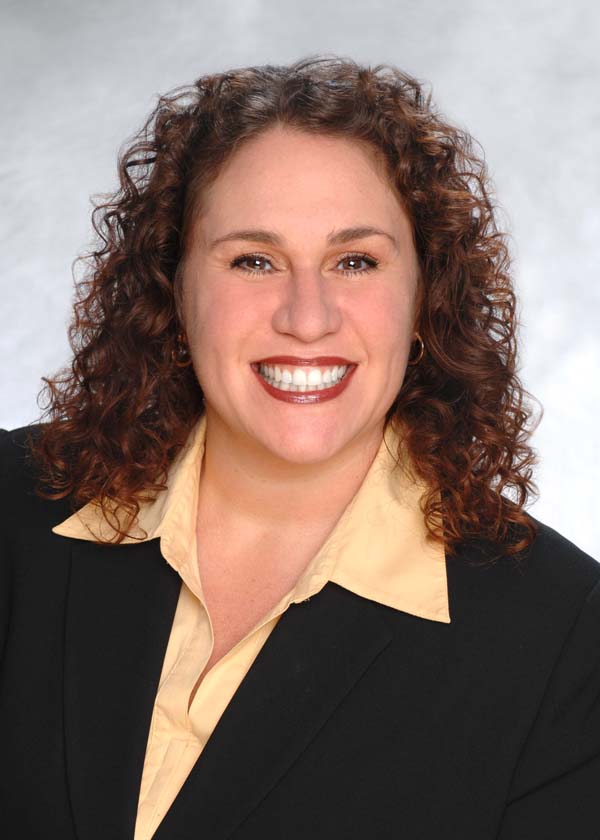 Shirley R. Sullinger, Esq. Jaimee K. Wellerstein, Esq.
Bradley & Gmelich proudly announces that Shirley R. Sullinger, Esq. and Jaimee K. Wellerstein, Esq. have been named Partners of the Firm
|
Wednesday, January 30, 2013
GETTING BUMPED AROUND: CALIFORNIA SUPREME COURT BROADENS ASSUMPTION OF THE RISK DOCTRINE
In a recent good common sense ruling, on December 31, 2012, the California Supreme Court explained that the primary assumption of the risk doctrine is not limited to only sporting activities, but applies to a wide variety of "recreational activities." In so ruling, many of our clients can now benefit from the liability protections afforded from the doctrine to obtain dismissal from lawsuits arising from a plaintiff's voluntary participation in various activities on their properties.
In Nalwa v. Ceder Fair, LP (2012) 2012 WL 6734705, plaintiff fractured her wrist while riding a bumper car at an amusement park. She sued the park operator alleging negligence, amongst other theories, and argued that defendant should have employed additional safety measures. Defendant filed a Motion for Summary Judgment based on the primary assumption of the risk doctrine that was granted by the trial court and later reversed by the Court of Appeal. However, the California Supreme Court reversed the Court of Appeal and confirmed the grant of summary judgment dismissing defendant from the case.
The Court explained the policy underlying the primary assumption of the risk doctrine: "Allowing voluntary participants in an active recreational pursuit to sue other participants or sponsors for failing to eliminate or mitigate the activity's inherent risks would threaten the activity's very existence and nature." The Court explained that "active recreation," because it involves physical activity and is not essential to daily life, is particularly vulnerable to the chilling effects of potential tort liability for ordinary negligence. For that reason, a variety of recreational activities from water-skiing, snow skiing, competitive swimming, group motorcycle riding, riding an inner tube towed by a boat, and even participation in the fire ritual at the Burning Man festival are activities that warrant application of the primary assumption of the risk doctrine.
As a consequence, the Court held "the primary assumption of risk doctrine, though most frequently applied to sports, applies as well to certain other recreational activities including bumper car rides." The Court applied the doctrine even though amusement parks are subject to state safety regulations and the park owners owe participants the heightened duty of care of a common carrier for reward. Notably, the Court did remind the parties that an exception to the rule existed, the doctrine cannot be applied when the defendant increases the risk of injury over and above that inherent in the activity.
Based on Nalwa, we expect that our firm will be using the primary assumption of the risk doctrine more often to protect our clients from liability from injuries stemming from recreational activities. Potentially, the defense could exist to protect against injuries from those riding skateboards through common areas to people engaged in recreational jogging across your properties. As always, Bradley & Gmelich remains available to discuss this case and any other legal issue with you.
Tuesday, November 6, 2012
REDUCTION OF SERVICES IN CALIFORNIA COURTS
Drastic budget cuts instituted in June, 2012, have had an immediate effect on pending and newly filed cases throughout California. San Diego Presiding Judge Robert Trentacosta warned that “the cuts envisioned by our budget reduction plan will affect every judge, court employee, and ultimately the litigants, court users and citizens”.
Significant changes include:
1. Increased Fees and Costs
As of July 10, 2012, there is a statewide increase in fees. First appearance fees have increased from $395.00 to $435.00 in unlimited jurisdiction ( and to $450.00 in Riverside and San Francisco) and to $370.00 in limited jurisdiction. The motion fee has been raised from $40.00 to $60.00. (Motions for summary judgment remain $500.00 per motion). The cost for facsimile filing has risen from between twenty and forty cents per page to seventy-five (75) cents per page.
2. Closed Courtrooms and Courthouses
Fifty-six (56) courtrooms in Los Angeles have been closed including twenty-four (24) civil courts. Other courtrooms will have significantly reduced hours.
In Fresno, all seven branches of the Fresno County Superior Court have been closed leaving one courthouse to service the entire region. San Bernardino is currently considering closing court houses in outlying areas such as Barstow. Throughout California, courthouses are facing closures or reduced hours.
3. Court Reporters are No Longer Guaranteed
Effective as of May 15, 2012, the Los Angeles Superior Court suspended Local Rule 2.21 and Appendix C, which provided court reporters for civil matters. court reporters are no longer available for general jurisdiction morning calendar matters or civil trials. A party may hire a court reporter from a court list, however, those reporters are only available 2 ½ days per week. A party may not hire its own court reporter who is not on the list without obtaining a stipulation from the court.
4. Jury Fees Must be Submitted Early and Are Non-Refundable
Code of Civil Procedure § 631 pertaining to payment of jury fees has been amended. Now, in order to secure a jury trial, each party must pay an advanced jury fee of $150.00 either prior to the initial case management conference in the matter or, if no case management conference was scheduled, within 365 days after the filing of the initial complaint. If the party has not appeared within the 365 days, the fees are due 25 days before trial. Although the Judge has some discretion to waive this rule, the intent is that any party who does not comply waives his or her right to a jury trial.
The $150.00 must be paid by each party who wishes to secure a jury and the amount is nonrefundable. If there are multiple plaintiffs or defendants, each person must pay the $150.00. The $150.00 is no longer credited to jury fees incurred on the second day of trial.
This rule is retroactive and applies to cases filed before the rule took effect on June 28, 2012. If a case is pending and it is not yet 365 days since the initial complaint was filed, the parties must pay the fees.
5. Elimination of Judicial Settlement Programs
The San Francisco Superior court has ended its Mandatory Settlement Conference program due to shortage of personnel and is starting a program run by volunteer attorneys. Although Los Angeles is continuing its mediation program, other regions are likely to eliminate or severely curtail their free programs.
6. Effect of Cuts on Pending Litigation
As a result of budget cuts, litigation costs have vastly increased. At a minimum, parties must pay higher filing fees, motion fees, and costs for court calls and facsimiles, as well as the non-refundable $150.00 jury fee per party. Additional costs will arise from the loss of free mediation programs, and the need to pay for court reporters and translators that were previously provided by the court.
Clients should anticipate that it will take longer for civil cases to reach trial, and that it will become difficult to obtain hearing dates for motions. Due to staff shortages, clerks are scarce, and documents are taking longer than usual to process which is delaying settlement and dismissal of cases. Judges are trying to clear their courtrooms by ordering litigants to attend multiple mediation sessions, or encouraging them to try their cases before retired judges.
Overall, insurers and clients should anticipate a pattern of delays and increased costs as additional cuts are implemented.
Wednesday, June 13, 2012
PUBLIC ENTITIES CAN BE HELD VICARIOUSLY LIABLE FOR ADMINISTRATORS’ NEGLIGENT HIRING AND SUPERVISION OF EMPLOYEE
In C.A. v. William S. Hart Union High School District (2012) 54 Cal. 4th 861, C.A., a minor high school student, sued the school district and others for negligent hiring, supervision and retention after he was sexually abused by his guidance counselor. After the trial court dismissed the complaint, stating that there was no authority to hold a public entity liable for such negligence, the student appealed and the matter was ultimately heard by the California Supreme Court.
The Supreme Court held that a school district could be held vicariously liable for negligent hiring, et al. with regard to a school employee who previously committed sexual misconduct. In doing so, the Supreme Court explained that the existence of a “special relationship” under California law between school employees and students creates a higher duty of care.
Public entity tort liability in California is entirely statutory under Government Code Section 815 and its related provisions. In making its ruling, the Supreme Court explained how a public entity may be considered vicariously liable under the Government Code for negligence by its administrators and supervisors in hiring, supervising, and/or retaining employees.
The Supreme Court emphasized that the liability of a public entity “must be based on evidence of negligent hiring, supervision or retention, not on assumptions or speculation.” A claim that an employee has committed sexual misconduct “does not of itself establish, or raise any presumption, that the employing [entity] should bear liability for the resulting injuries.” Even when negligence by a supervisor is established, “the greater share of fault will ordinarily lie with the individual who intentionally abused or harassed the [victim] than with any other party…” However, without a “special relationship” like the ones between school employees and students, individual administrators and supervisors for a public entity could not be held liable for negligent hiring, retention or supervision of a fellow employee, and thus there would be no vicarious liability for their public entity employers based on those employees’ actions.
It can be argued that the Supreme Court’s specific ruling here is narrowly applicable to cases involving school district employees and students. However, both public and private entities should be diligent in both (a) confirming the background and reference information of potential employees and (b) investigating any reports or complaints of inappropriate conduct of current employees.
Thursday, May 3, 2012
PRIVATE SECURITY COMPANY DEFEATS PLAINTIFF’S APPEAL IN MALICIOUS PROSECUTION AND EMOTIONAL DISTRESS CASE
In Darin Johnson v. Ralphs Grocery Company, et al. (March 20, 2012) (No. D058312), plaintiff Johnson sued Special Operations International, Inc. (“SOI”), a private security company, and Ralphs Grocery Company (“Ralphs”). SOI contracted with Ralphs to provide security services at the subject store. Ms. Johnson alleged that she was falsely accused of shoplifting a tablecloth and firewood, handcuffed, detained for about two hours, and paraded through the Ralphs store by two security officers in a humiliating manner.
After Johnson successfully defended herself against the shoplifting charges in criminal court, she sued Ralphs and SOI for malicious prosecution, negligence, and infliction of extreme emotional distress. Bradley & Gmelich represented SOI and its two security officers, and filed a motion to dismiss Johnson's claim. The trial court agreed and struck Johnson’s malicious prosecution claim as an improper strategic lawsuit against public participation (“SLAPP”). The trial court also ruled that Johnson failed to present sufficient facts to support her emotional distress claims. Plaintiff appealed the trial court's ruling. Lena J. Marderosian, Esq. of Bradley & Gmelich successfully argued this matter before the Court of Appeal Fourth Appellate District on behalft of SOI and its two security officers.
The Court of Appeal upheld the lower court’s rulings. In ruling on an anti-SLAPP motion, the trial court must decide whether the defendant has shown that the challenged cause of action arises from protected activity; and whether the plaintiff has sufficient evidence to demonstrate a probability of prevailing on that claim. The Court of Appeal found that SOI’s act of contacting the police regarding Johnson’s suspected crime was protected activity. While false arrest claims do not arise from protected activity, Johnson did not allege a false arrest cause of action against SOI. Also, the Court of Appeal found that Johnson failed to show a lack of probable cause for SOI’s conduct, as Johnson had no receipt for the firewood she supposedly purchased, and that the Ralphs cashier had no recollection of Johnson paying for it.
As to the emotional distress action, the Court recognized that a plaintiff must first show “outrageous conduct by the defendant” to justify such a claim. SOI’s conduct was not outrageous, as SOI had probable cause to detain Johnson, and Penal Code Section 490.5 allows a merchant to detain a person for a reasonable time to investigate whether a person has unlawfully taken merchandise. Although the SOI employees supposedly told Johnson as she was escorted out of the store, “that’s what you get” and “you’re not welcome to shop here anymore,” the Court explained that mere insulting language does not constitute outrageous conduct.
With this decision, private security companies and shop owners should feel comfortable in instructing their employees to contact local police departments to report possible shoplifting or other crimes they have witnessed. However, they should still be cautious in instructing employees on whether to detain a person suspected of a crime. Further, even though the Court held that insulting language, by itself, will not subject a company to a claim for intentional infliction of emotional distress, it would be prudent to train employees to maintain a reasonable level of professionalism when interacting with a potential suspect.
Wednesday, January 25, 2012
HISTORY OF PRIOR ACCIDENTS ON PROPERTY EXCLUDED FROM EVIDENCE IF THERE HAS BEEN A SUBSTANTIAL CHANGE IN CONDITION OF PROPERTY
In Ceja v. Department of Transportation (issued December 19, 2011) the Appellate Court held that the history of incidents on property prior to a substantial change of the property may be properly excluded from evidence, as they have no tendency to prove the existence of a dangerous condition.
In May 2003, Gerardo Ceja (“Ceja”) was driving his vehicle northbound on Route 99 when he crossed the median and struck two southbound vehicles. Both Ceja and his passenger, Simon Olivarez (“Olivarez”), died in the collision. Ceja’s and Olivarez’s surviving family members sued the Department of Transportation (“DOT”) for wrongful death damages, alleging that the lack of a median barrier created a dangerous condition.
In 1994, the portion of Route 99 where the incident occurred had been reconfigured from a four-lane highway to a six-lane highway. The DOT requested the Court exclude evidence of four accidents that had occurred in the same area before the 1994 reconfiguration on the grounds that the physical condition of the area had substantially changed. After the trial court granted the DOT’s request, the jury entered a verdict in favor of the DOT. Ceja’s and Olivarez’s family members appealed.
The Court of Appeal upheld the trial court’s decision to exclude evidence of the pre-1994 accidents. In deciding whether a dangerous condition of property exists at the time of a given accident, a trial court has the discretion to admit evidence of prior accidents where the conditions existing at the time of the those accidents are similar. However, there must be proof that there was “no substantial change” during the time between the prior accidents and the accident being considered in a present lawsuit. In this case, the Court of Appeal found that the expansion of the highway nine years before the accident resulted in a “substantial change” in the property. As a result, evidence of accidents on the four-lane highway prior to 1994 was inadmissible, as those accidents would not tend to prove that the existing six-lane highway was dangerous in 2003.
While the Court of Appeal applied this reasoning to an incident on a public road, this decision should be applicable to situations involving private property, as well. The holding here is a victory for property owners in that not every incident that occurs on their property will be deemed relevant to prove the existence of a dangerous condition. If modifications have been made between the time that prior incidents occurred and the time of the incident upon which a present lawsuit is based, it is likely that the prior incidents will be successfully excluded from evidence.
Subscribe to:
Posts (Atom)